Anthropic Restores Claude Fable 5 After Export Controls Lifted
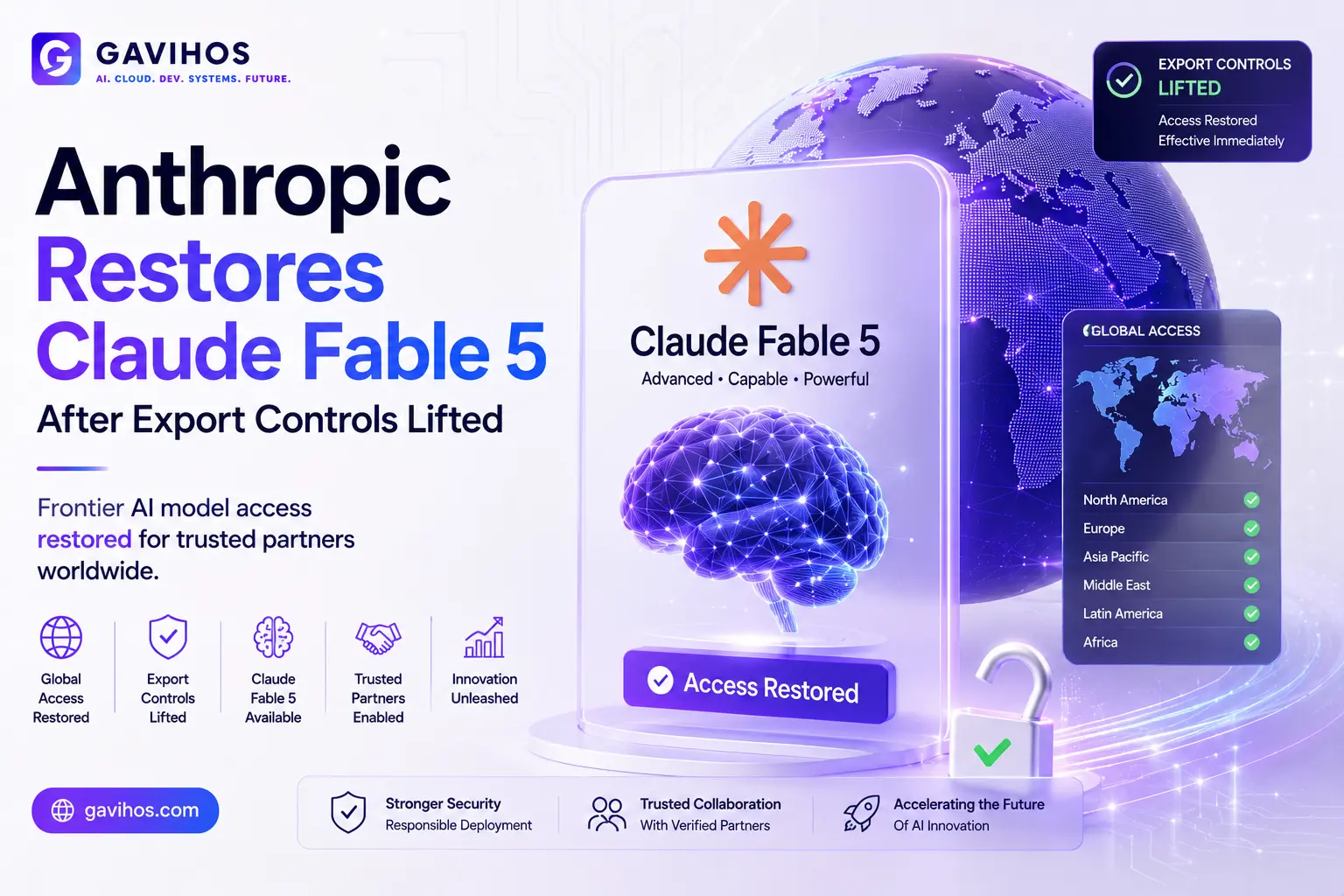
Anthropic Restores Claude Fable 5 After Export Controls Lifted

On July 1, 2026, Anthropic published “Redeploying Claude Fable 5,” confirming that US Commerce Department export controls on its Fable 5 and Mythos 5 models — in place since June 12, 2026 — had been lifted, and that Fable 5 was being redeployed globally. This is a fast-moving story GAVIHOS has been tracking carefully. A … Read more
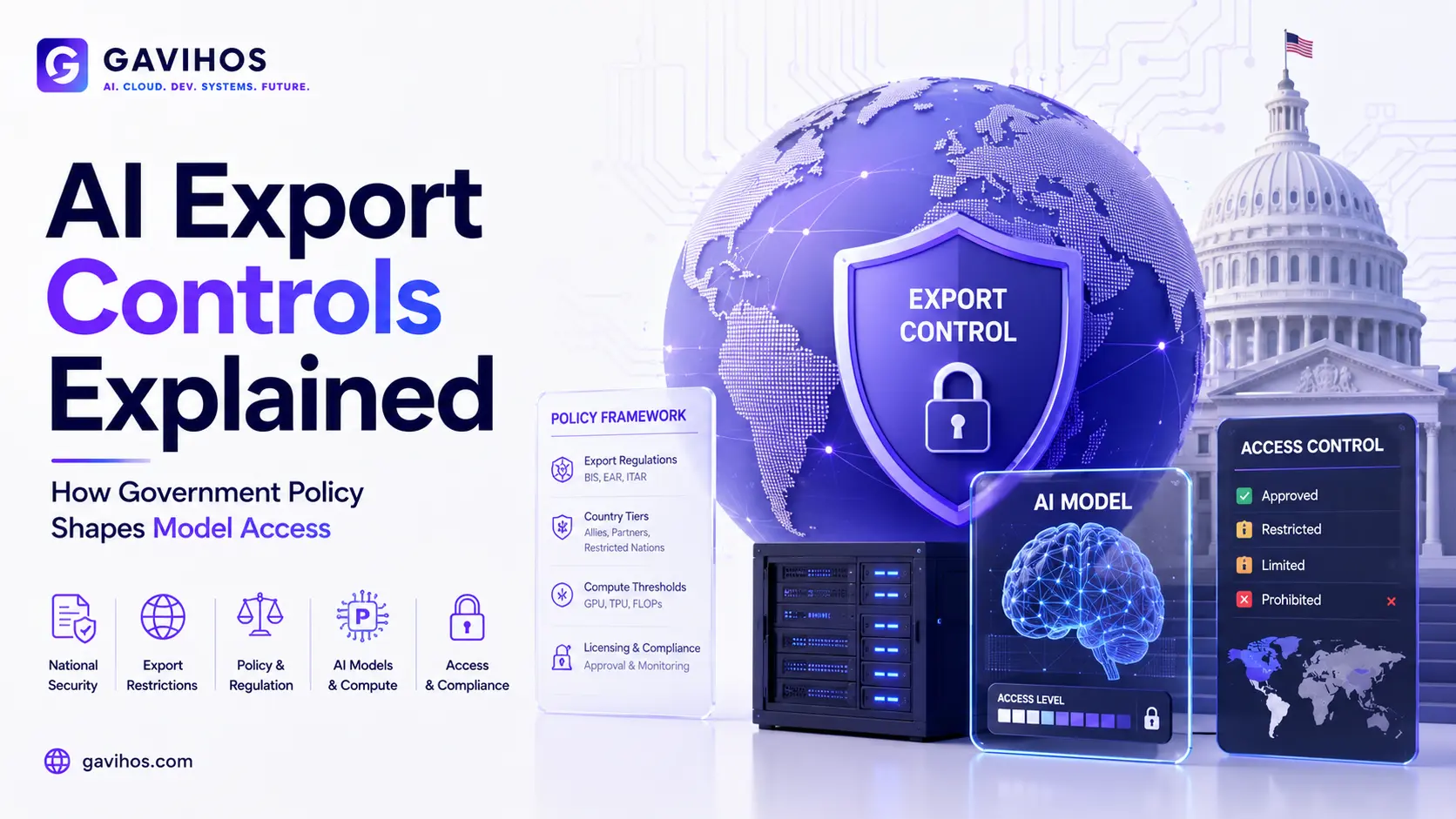

AI Export Controls Explained: How Government Policy Shapes Model Access

AI Export Controls Explained: How Government Policy Shapes Model Access

Most discussions of what determines whether you can use a given AI model focus on price, capability, or platform availability. There is a fourth factor that increasingly matters just as much: government policy. In some cases, a model that is technically ready and commercially available can become unavailable — or have its usage capped — … Read more

Anthropic Claude Science: Inside the AI Workbench Built for Researchers

Anthropic Claude Science: Inside the AI Workbench Built for Researchers

Introduction On June 30, 2026, Anthropic launched Claude Science, an AI workbench positioned specifically for scientific research, at an event the company called “The Briefing: AI for Science.” The announcement included case studies involving the pharmaceutical company Novo Nordisk and the biomedical research organization the Allen Institute, along with a research-credits grant program for institutions … Read more

What Is AI for Science? Complete Guide to AI Research Workbenches

What Is AI for Science? Complete Guide to AI Workbenches

Introduction Most AI products built for professional use are general-purpose: a chat assistant, a coding agent, a writing tool. “AI for science” is different. It describes a growing category of AI systems purpose-built for the specific workflows of scientific research — reading and synthesizing literature, generating and testing hypotheses, analyzing experimental data, and helping researchers … Read more

Prompt Engineering Complete Guide: From Basics to Advanced Techniques

Prompt Engineering Complete Guide: From Basics to Advanced Techniques

Introduction Prompt engineering is the practice of designing inputs to language models to reliably produce useful outputs. That definition sounds simple. The implications are not. The same model given two different prompts can produce dramatically different outputs — one correct and useful, the other wrong and confidently stated. No code change, no fine-tuning, no infrastructure … Read more

LangGraph Explained: Complete Guide to Multi-Agent Orchestration

LangGraph Explained: Complete Guide to Multi-Agent Orchestration

Introduction Most AI tutorials show you how to make a single LLM call. Real applications need more: multiple steps, conditional branching, tool use, state that persists across turns, and the ability to pause for human review before continuing. That is the gap LangGraph fills. LangGraph is a Python library for building stateful, multi-step AI workflows. … Read more

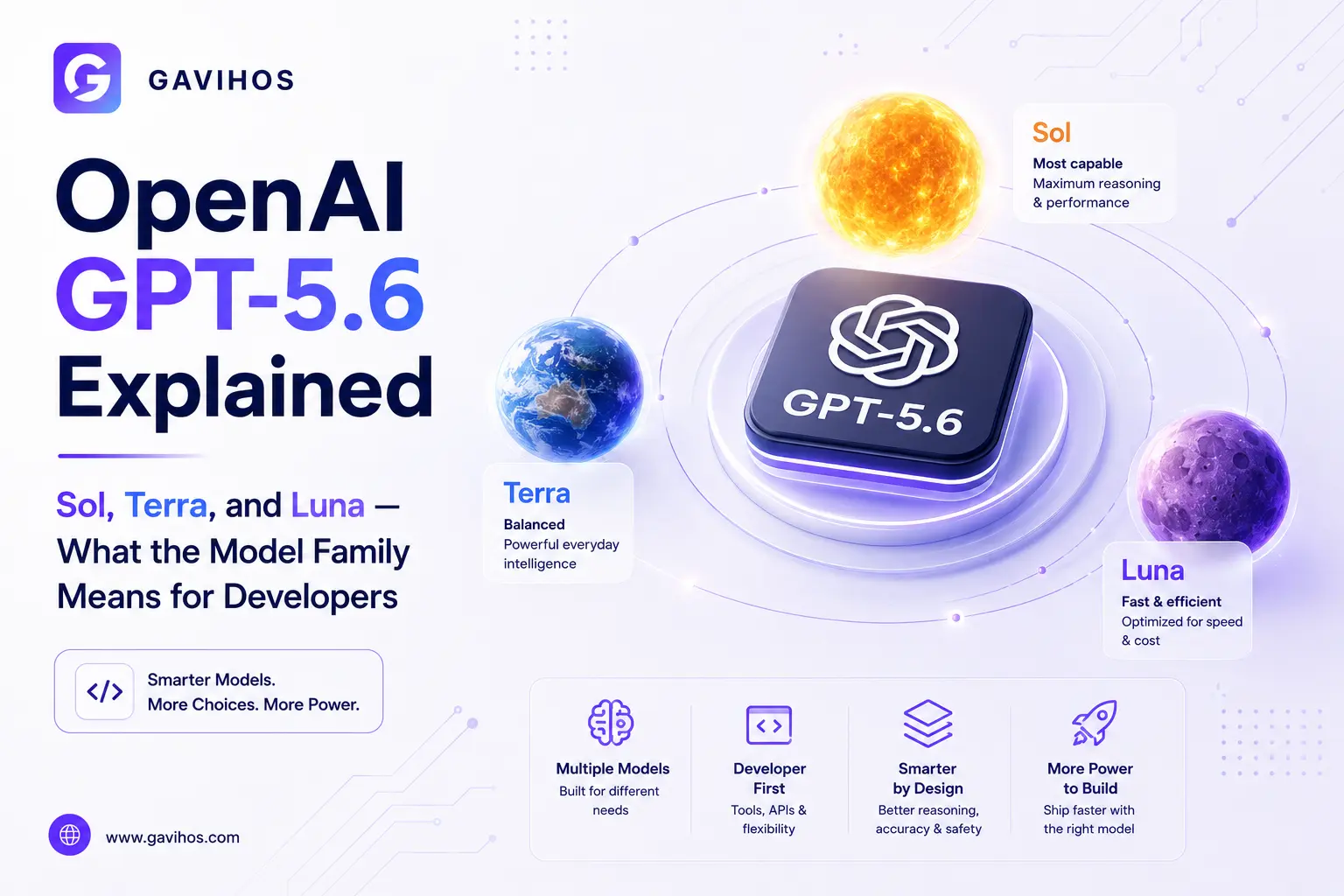
OpenAI GPT-5.6 Explained: Sol, Terra, and Luna — What the Model Family Means for Developers

OpenAI GPT-5.6 Explained: Sol, Terra, and Luna — What the Model Family Means for Developers

Introduction On June 26, 2026, OpenAI announced three new models — Sol, Terra, and Luna — under the GPT-5.6 family. The announcement is significant not because it follows a new model release, but because of what it reveals about where AI model development is heading: deliberate product differentiation by capability tier, active government involvement in … Read more

Claude Extended Thinking Mode Is Now Generally Available: What Developers Need to Know

Claude Extended Thinking Mode Is Now Generally Available: What Developers Need to Know

Introduction Anthropic made Extended Thinking generally available for the Claude API on June 26, 2026. Extended Thinking is a mode where Claude works through a problem step by step before generating a final answer — thinking through intermediate reasoning that is visible to developers but not included in the response token count in the same … Read more

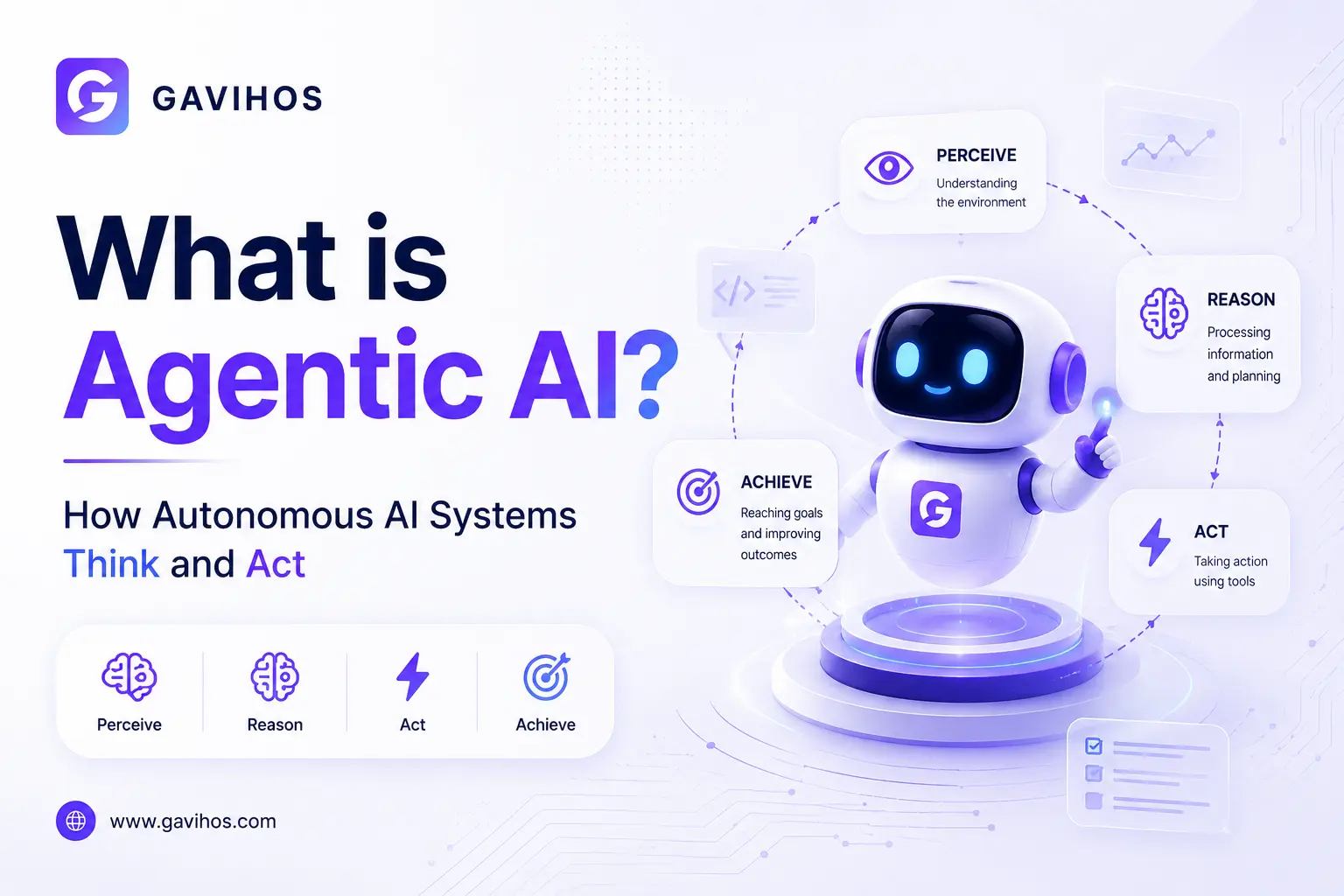
What is Agentic AI? How Autonomous AI Systems Think and Act

What is Agentic AI? How Autonomous AI Systems Think and Act

Introduction Agentic AI refers to AI systems that pursue goals autonomously — planning a sequence of actions, executing them, observing results, and adjusting based on what they find — rather than waiting for a human to direct each step. The word “agentic” comes from agency: the capacity to act independently toward a goal. An agentic … Read more

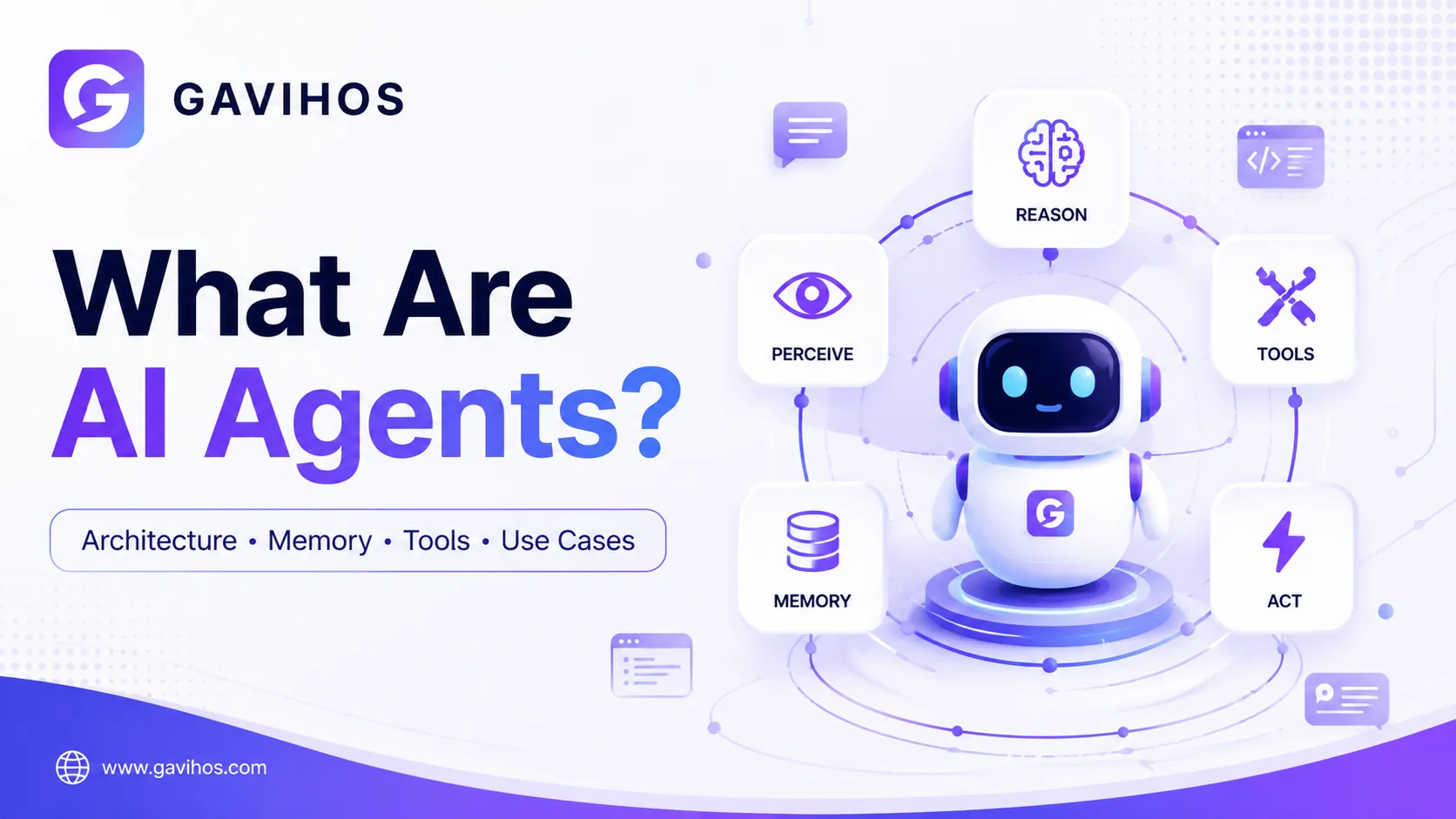
What Are AI Agents? Architecture, Memory, Tools and Real-World Use Cases

What Are AI Agents? Architecture, Memory, Tools and Real-World Use Cases

Introduction An AI agent is a system that uses a large language model as its reasoning engine to perceive inputs, make decisions, use tools, and take actions — repeatedly, across multiple steps — until a goal is achieved. This is different from a standard LLM call. When you ask ChatGPT or Claude a question and … Read more