Introduction
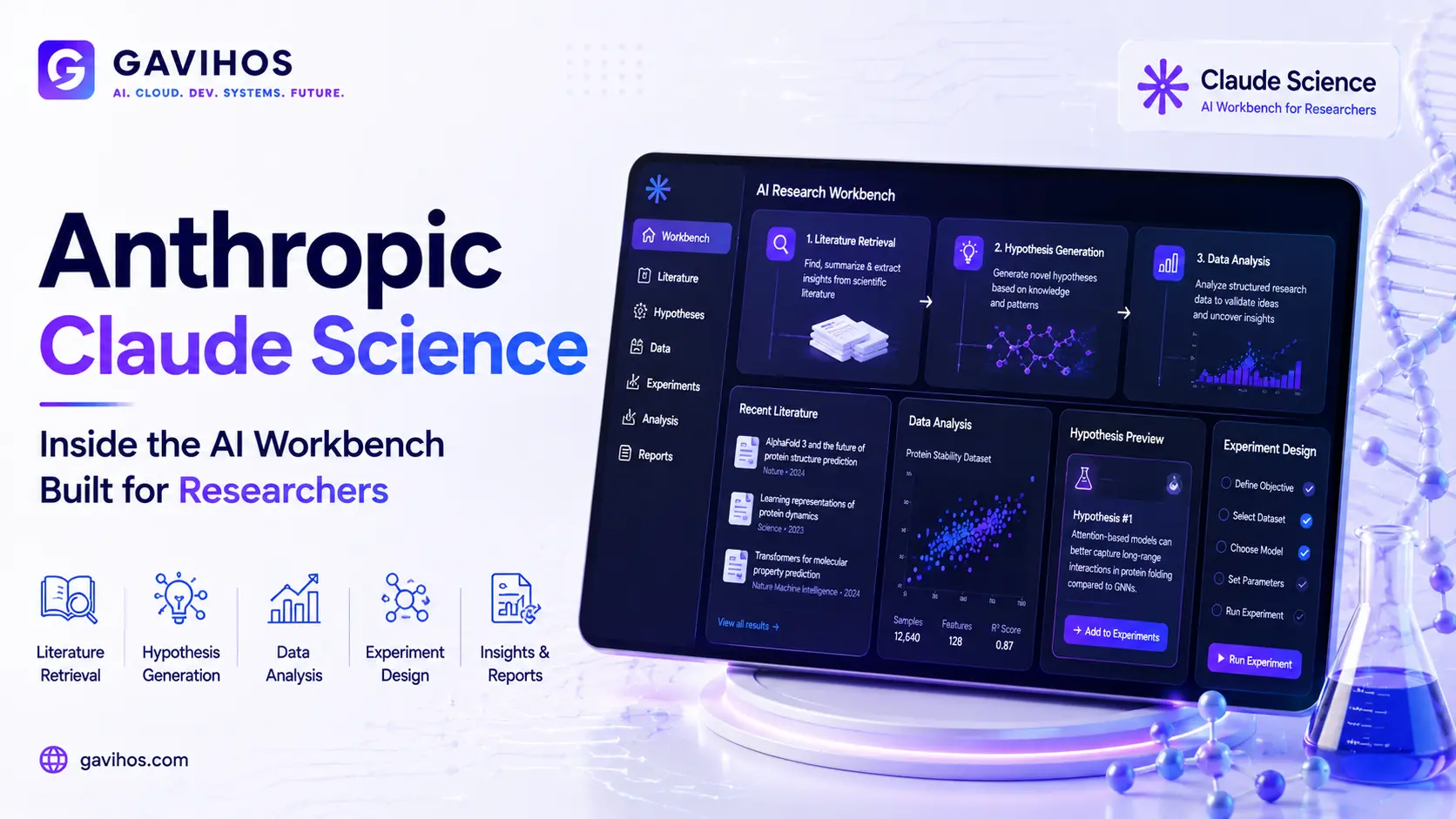
On June 30, 2026, Anthropic launched Claude Science, an AI workbench positioned specifically for scientific research, at an event the company called “The Briefing: AI for Science.” The announcement included case studies involving the pharmaceutical company Novo Nordisk and the biomedical research organization the Allen Institute, along with a research-credits grant program for institutions and researchers, with applications closing July 15, 2026.
This is a notable move for a company best known for the Claude family of general-purpose assistant models and for developer-focused products like Claude Code. Claude Science signals that Anthropic is willing to build and market a dedicated product around a single, high-stakes professional workflow — scientific research — rather than relying on general-purpose Claude to serve that audience indirectly.
This analysis covers what was announced, why it matters, and what it means for developers, research institutions, and the broader AI industry.
What Happened
Anthropic held “The Briefing: AI for Science,” an event dedicated to announcing Claude Science, an AI workbench built for scientific research use. According to Anthropic’s official announcement, the launch included:
Named case studies. Novo Nordisk, a major pharmaceutical company, and the Allen Institute, a nonprofit biomedical and neuroscience research organization, were both cited as organizations using the workbench in their research work.
A research-credits grant program. Anthropic introduced a grant program offering research credits, with applications closing July 15, 2026. This gives researchers and institutions a path to access the workbench at reduced or no direct cost, presumably to encourage adoption and gather real-world usage data across a broader set of research contexts than paying enterprise customers alone would provide.
The announcement was made directly by Anthropic through its official news channel, which gives this launch a clean, first-party fact-check standing — unlike many “trending” AI stories that circulate first through press speculation or leaks.
Why It Matters
A new, named application category. By branding this as Claude Science rather than simply promoting general-purpose Claude for research use, Anthropic is asserting that scientific research is a distinct enough workflow to justify a dedicated product identity. This mirrors a broader industry pattern of AI labs building vertical-specific products — for coding, for research, for enterprise workflows — on top of general foundation models, rather than treating one general assistant as sufficient for every professional context.
Real-world validation from credible institutions. Novo Nordisk and the Allen Institute are not marketing partners chosen for name recognition alone — both organizations do work where being wrong has real consequences: drug research and biomedical science. A named case study from either organization function as a credibility signal that consumer or developer adoption numbers cannot provide on their own.
A go-to-market pattern worth watching. The research-credits grant program is a specific mechanism: subsidize access for research institutions in exchange for real-world usage and validation. This is a lower-cost way for Anthropic to gather evidence of how well its models perform on genuinely hard, high-stakes reasoning tasks, compared to relying solely on enterprise sales cycles.
Industry Impact
Claude Science places Anthropic in more direct competition for the attention of research institutions — a segment that other AI labs and specialized startups have also been courting, though usually with less high-profile branding.
The launch also reinforces a trend visible across the AI industry in 2026: general-purpose foundation models are increasingly being packaged into workflow-specific products rather than sold as one general tool for every use case. Coding agents, research workbenches, and enterprise-governance layers are all examples of the same underlying pattern — the foundation model is the engine, but the product wrapped around it is built for a specific job.
For competing AI labs, Claude Science raises the bar for what a credible “AI for research” offering needs to include: not just model capability, but named institutional partnerships and a mechanism (like a grant program) for reaching researchers who would not otherwise become paying customers early.
Developer Impact
For developers building research tools: Claude Science is a reminder that vertical, workflow-specific AI products are a viable strategy even for companies whose core business is a general-purpose model. Teams building AI tools for specialized professional workflows — legal research, financial analysis, regulatory review — can look at this launch as a template: partner with credible institutions in the target domain, build workflow-specific tooling, and consider a credits or grant mechanism to seed adoption.
For developers working with Anthropic’s models generally: A dedicated science-focused product suggests continued investment in the underlying reasoning, retrieval, and structured-output capabilities that research workflows demand — improvements that typically benefit Claude’s broader model family and API users over time, not just Claude Science users specifically.
For researchers who also write code: Many computational researchers already use Claude or similar tools for analysis scripts and data processing. A dedicated research workbench, if it integrates well with existing computational workflows, could reduce the friction of switching between a general coding assistant and research-specific literature and data tools.
Business Impact
A new revenue and partnership category for Anthropic. Research institutions, particularly in pharmaceuticals and biomedical science, represent large, well-funded organizations with genuine budget for tools that measurably accelerate R&D. This is a different customer profile than either individual developers or general enterprise software buyers.
Case studies as a sales and credibility asset. Named partnerships with organizations like Novo Nordisk and the Allen Institute function as reference customers for future enterprise research deals — a common enterprise software pattern now being applied specifically to frontier AI.
Research institutions gain leverage. The grant program gives smaller research institutions and academic groups a way to evaluate whether frontier AI tools genuinely help their specific work, without committing significant budget upfront. This lowers the barrier for institutions that might otherwise be priced out of experimenting with these tools.
Future Outlook
The most immediate thing to watch is the July 15, 2026 application deadline for the research-credits grant program — the response volume and the resulting case studies over the following months will be a meaningful signal of real-world demand for this category, beyond the initial launch partners.
Longer term, expect two things. First, more AI labs are likely to announce their own dedicated research-focused products or partnerships, following a similar credibility-building playbook. Second, expect independent scrutiny: as institutions use Claude Science and similar tools long enough to have real outcomes to report, expect published assessments — from the institutions themselves or from independent researchers — that go beyond vendor-selected case studies. That independent evidence, more than any launch announcement, will determine whether “AI for science” becomes a durable category or a passing branding exercise.
FAQ
1. What is Claude Science? Claude Science is an AI workbench for scientific research, launched by Anthropic on June 30, 2026, at “The Briefing: AI for Science” event.
2. Who is using Claude Science? Anthropic’s announcement cited Novo Nordisk, a pharmaceutical company, and the Allen Institute, a biomedical and neuroscience research organization, as case studies.
3. What is the research-credits grant program? It is a program introduced alongside the Claude Science launch that offers research credits to researchers and institutions, with applications closing July 15, 2026.
4. How is Claude Science different from general-purpose Claude? Claude Science is positioned specifically for scientific research workflows, as distinct from Anthropic’s general-purpose Claude assistant models used across many types of tasks.
5. Is Claude Science available to individual researchers or only large institutions? The research-credits grant program suggests Anthropic intends to make access available beyond just large enterprise partners like Novo Nordisk, though the full scope of eligibility should be confirmed directly with Anthropic.
6. Why did Anthropic launch a dedicated science product instead of promoting general Claude for research? Building a dedicated product signals that scientific research is treated as a distinct enough workflow — with its own data types, literature volume, and reasoning demands — to warrant purpose-built tooling rather than a general assistant applied to the task.
7. What does this mean for competing AI labs? It raises the bar for what a credible AI-for-research offering looks like, likely encouraging competitors to pursue similar institutional partnerships and dedicated research products.
8. When do applications for the research-credits program close? July 15, 2026, according to Anthropic’s official announcement.
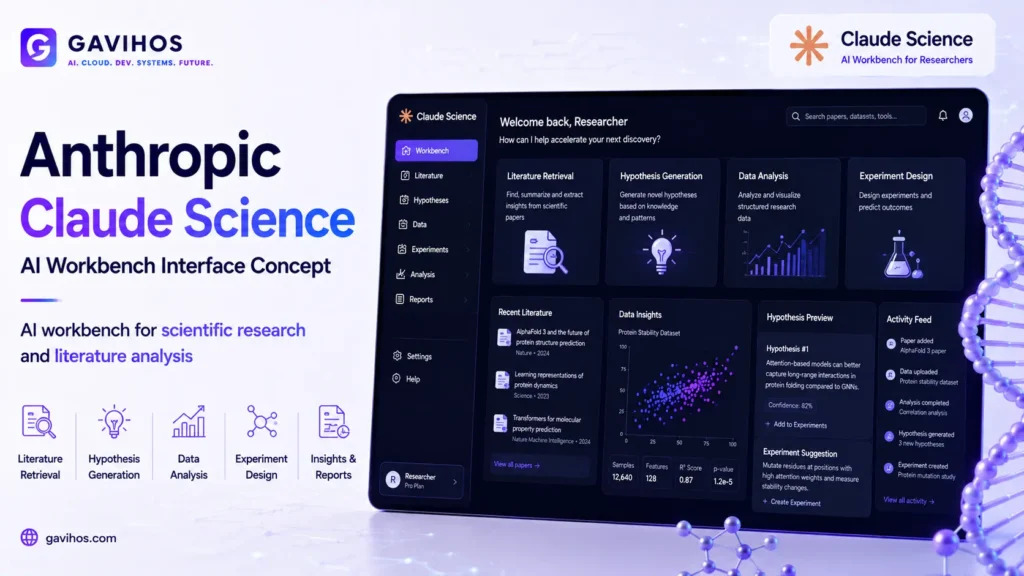
9. Does Claude Science replace human researchers? No credible reporting or claim suggests this. AI research tools in this category are positioned as accelerants for literature review, hypothesis generation, and data analysis — not replacements for scientific judgment or experimental work.
10. Where can I read the official announcement? Anthropic’s official announcement is available at anthropic.com/news/claude-science-ai-workbench.
Analyst Perspective
The most important detail in this launch is not the product itself but the choice of case studies. Anthropic could have led with developer-facing metrics or general adoption numbers, as it typically does for Claude. Instead, it led with Novo Nordisk and the Allen Institute — organizations whose work involves genuinely high-stakes reasoning, not casual chat interactions.
That choice reflects a broader shift in how frontier AI labs build credibility. Consumer and developer adoption numbers demonstrate reach, but they do not demonstrate reliability on hard problems. A pharmaceutical company or a biomedical research institute putting its name on a case study is a different kind of signal — one that says the tool held up well enough on real research work that the institution was willing to be publicly associated with the result.
The research-credits grant program deserves more attention than it is likely to get in initial coverage. It is not simply a goodwill gesture — it is a mechanism for Anthropic to accumulate real-world validation from a wider set of institutions than enterprise sales alone would reach, at relatively low direct cost. Expect this pattern — subsidized access in exchange for real-world evidence and case studies — to become a standard AI lab strategy for any market segment where credibility matters more than volume.
The open question, which this announcement alone cannot answer, is durability. A launch event and two case studies establish that Claude Science works well enough for specific, likely carefully scoped use cases at two organizations. Whether it holds up across the far messier reality of most research institutions’ data, workflows, and domain-specific needs is something only time and independent reporting — not the launch announcement — will reveal.
Key Takeaways
- Anthropic launched Claude Science, an AI workbench for scientific research, on June 30, 2026, at “The Briefing: AI for Science”
- Case studies cited in the announcement include Novo Nordisk and the Allen Institute
- A research-credits grant program accompanies the launch, with applications closing July 15, 2026
- The launch reflects a broader industry pattern of packaging general-purpose foundation models into workflow-specific products for high-value professional domains
- Case studies with credible research institutions function as a different, higher-stakes credibility signal than general consumer or developer adoption metrics
- The real test of this category will come from independent, long-term usage reporting — not the launch announcement itself
Continue Learning
- What Is AI for Science? Complete Guide to AI Research Workbenches
- What is RAG? Complete Guide to Retrieval-Augmented Generation
- What Are AI Agents? Architecture, Memory, Tools and Real-World Use Cases
- What is Claude Fable 5?
- What is Agentic AI? How Autonomous AI Systems Think and Act
About GAVIHOS
GAVIHOS helps developers, founders and technology enthusiasts understand AI, software engineering and emerging technologies through practical guides, tutorials and industry analysis.
Stay Updated
Follow GAVIHOS for practical AI, technology and developer-focused insights.
External Links
| Source | URL |
|---|---|
| Anthropic — Claude Science AI Workbench | https://www.anthropic.com/news/claude-science-ai-workbench |